You walk into a dealership with a number in your head. Maybe it is $700 a month. The salesperson nods, taps a keyboard and slides a screen across the desk. The payment says $689. Perfect.
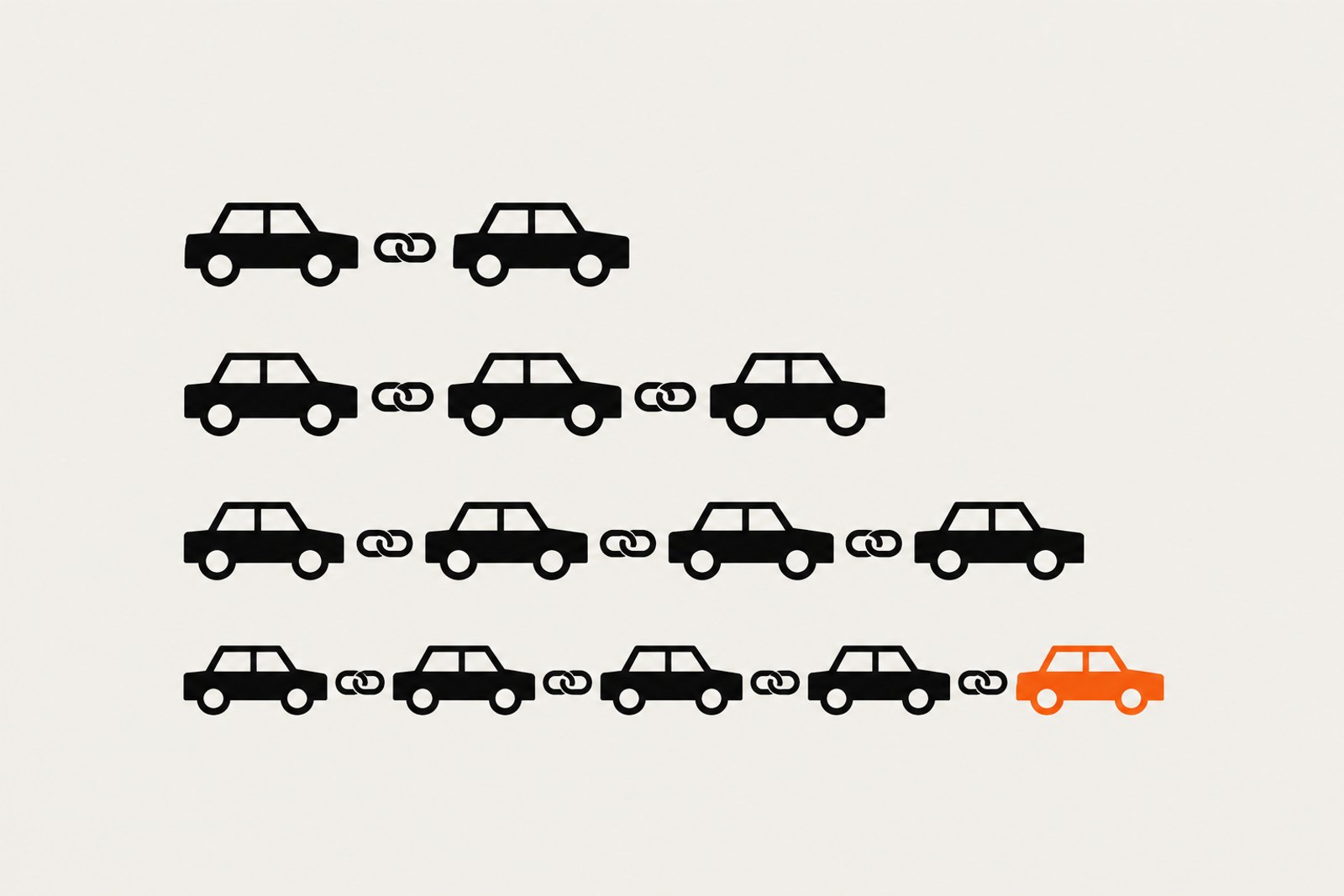
What the screen does not shout is the other number: how many months it takes to get there. Seven years, in this case. Eighty-four payments. Same car, same sticker price. A very different bill.
How common is the 84-month loan?
In the third quarter of 2026, more than 25% of financed new vehicles carried a term of 84 months or longer, a record, up from 21.8% a year earlier (Edmunds, 2026). The typical financed new car that quarter came with an average of $44,664 borrowed, a 7.0% average interest rate and a $787 monthly payment (Edmunds, 2026).
Experian, which measures differently, put the average new-vehicle loan term at about 69.5 months in the first half of 2026 and found nearly one in three new loans running longer than six years (Experian, 2026). Different data sets, same direction.
The same loan, four lengths
Let’s keep the loan fixed at Edmunds’ Q3 2026 average: $44,664 at 7.0%. We only change the term. The payments and interest below are our own calculation from the standard loan formula, with no down payment, fees or taxes added.
| Term | Monthly payment | Total interest | Total paid |
|---|---|---|---|
| 48 months | $1,070 | $6,674 | $51,338 |
| 60 months | $884 | $8,400 | $53,064 |
| 72 months | $761 | $10,162 | $54,826 |
| 84 months | $674 | $11,960 | $56,624 |
Going from 48 months to 84 months drops the payment by about $395 a month. It also adds about $5,286 in interest. You pay more to feel less.
The other cost: being “underwater”
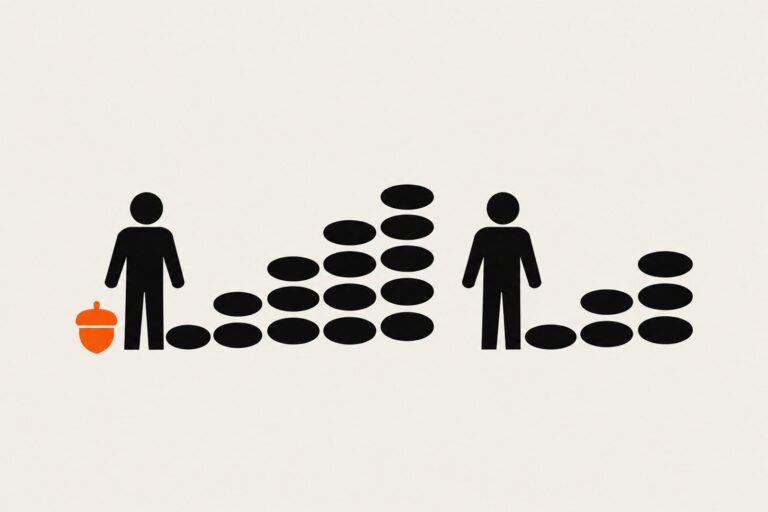
A car loses value fast. A long loan pays down slowly. When you owe more than the car is worth, you are “underwater,” also called negative equity.
In our example, after 12 months you would have paid down about $10,026 of a 48-month loan but only about $5,125 of an 84-month loan. After 36 months the numbers are $32,303 against $16,513. The slower the paydown, the longer you may owe more than the car would sell for.
Edmunds found that in the second quarter of 2026, 29.6% of trade-ins toward new-vehicle purchases had negative equity, and those buyers owed an average of $6,884 (Edmunds, 2026; figures via press summaries). Often that debt gets rolled into the next loan.
A lower monthly payment is a price. You pay it later, with interest.
financenexttemp.com/ (our own line, not a quotation)
The twist: the long loan is not always the villain
Here is the fair counterpoint. A longer loan can be the only way a payment fits a tight monthly budget. A cheaper car on a shorter loan is not always possible. And rates differ a lot by credit score, so the 7.0% average hides a wide range. A buyer with a low rate would see smaller interest gaps than the table shows. A buyer with a high rate would see bigger ones.
The point is not that seven-year loans are always bad. It is that the monthly payment alone cannot tell you whether a deal is cheap. Cars last longer than they used to, too, but a loan can outlive a good stretch of the car’s life.
What the table hides
Real deals are messier. A down payment shrinks the loan. Fees, taxes and add-ons grow it. Edmunds’ average payment of $787 is a blend of every term, rate and down payment, which is why it sits between our 60-month and 72-month rows rather than matching any of them. Use the table as a map of the trade-off, not a quote.
One more thing: a slower paydown matters most if life changes. Job moves, new babies and long commutes can all end a car’s usefulness sooner than the loan ends. Then the gap between what you owe and what the car fetches becomes your problem.
Three questions the payment screen skips
How many months? What is the total of all payments? What would the car be worth in year three? Once you have those, the $689 headline looks different.
The cheapest-looking payment is rarely the cheapest car.
For illustration only. Not financial advice.
Sources
- Edmunds, “New Car Financing Records Pile Up in Q3 as Buyers Borrow More and Stretch Loans Longer”, press release, Q3 2026 (figures as reported by GM Authority, 7 October 2026, because the Edmunds page blocked automated access). link
- Edmunds, “Q2 New Vehicle Purchases with Negative Equity Trade-Ins Hit Record…”, July 2026 (via search summary). link
- Experian, “New Experian Automotive Report Shows Nearly One Third of Automotive Loan Terms Are Longer Than Six Years”, 28 May 2026. link
- Own calculations: standard amortization formula applied to $44,664 at 7.0% APR.